How does level control work?
With the help of a level control system, the vehicle level can be kept constant regardless of load or trailer operation. This is particularly advantageous for estate cars, off-road vehicles and vans. This adjustment is made possible by a 2-corner air suspension system.
The desired level can be achieved by releasing the compressed air from the system or inflating the spring bellows.
A 4-corner air suspension offers even more comfortable and extensive options. This allows the entire vehicle level to be adjusted according to the surroundings. For example, the level can be lowered on long highway journeys, thereby reducing fuel consumption through lower air resistance. On rough terrain, on the other hand, it is possible to raise the vehicle for more ground clearance. This protects the vehicle underbody from contact with uneven surfaces.

Pros & Cons
Level control systems increase ride comfort and offer the option of increasing underbody clearance or lowering the vehicle level as required.
Pneumatic level control systems can be installed regardless of the type of drive.
As these systems are more complex than conventional suspension systems, they are only used from the upper mid-range upwards for cost reasons.
Solutions
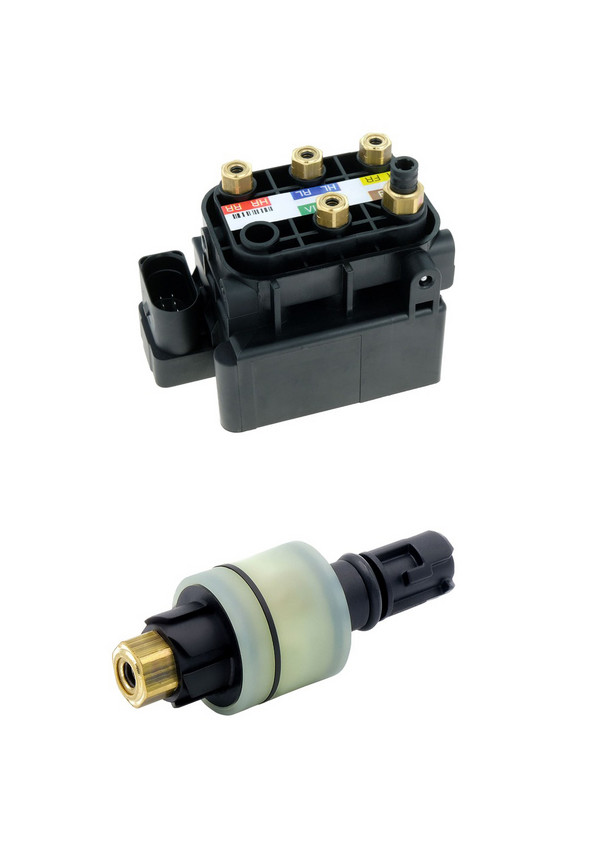
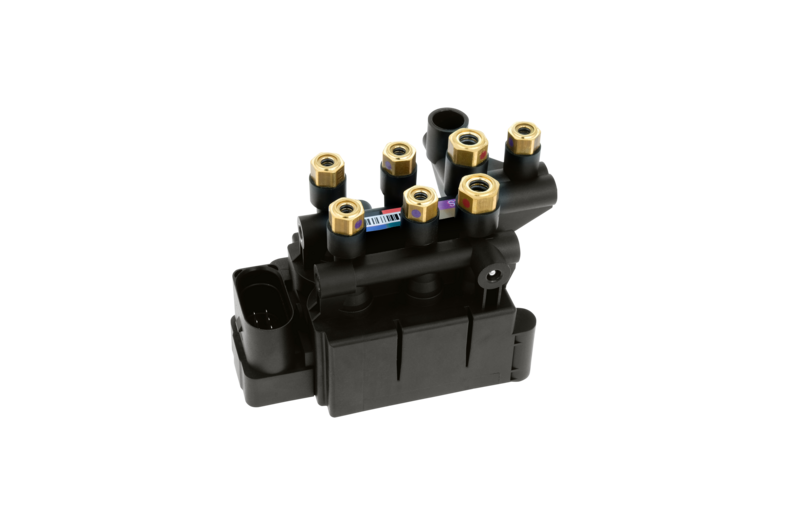
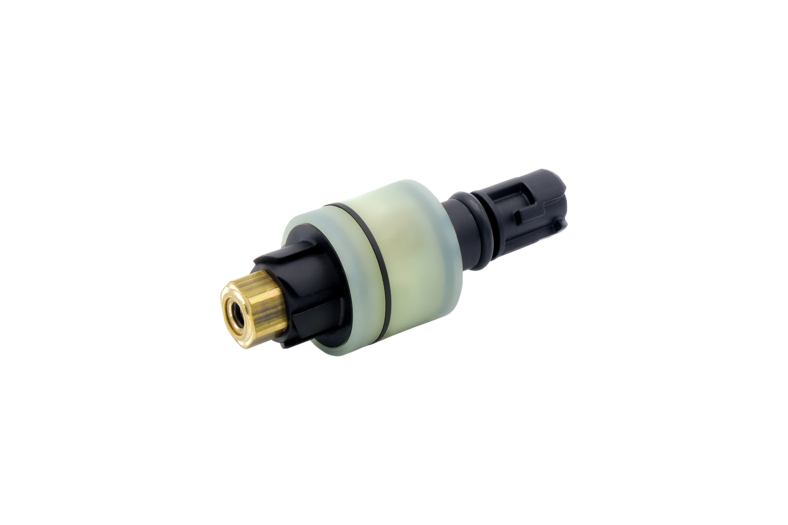
High-performance valves and blocks for air suspension with integrated pressure sensor are characterized by the following aspects:
- Compact design
- Simple assembly
- Robustness
- Improved coil system
- Customizable
RAPA Automotive's air suspension components have established themselves on the major automotive markets since the early 2000s and are synonymous with quality and reliability. Thanks to our many years of market experience, we offer attractive price-performance ratios as well as comprehensive advice.